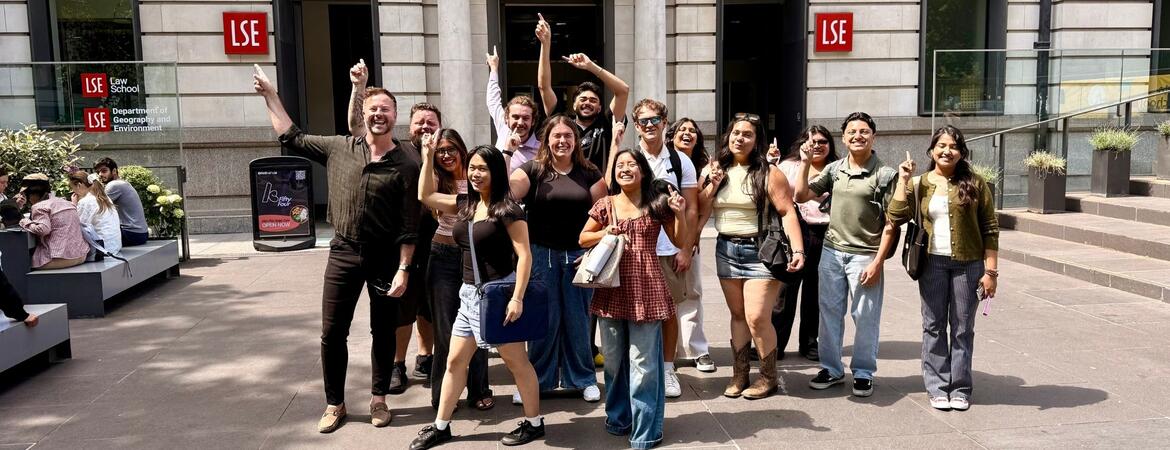
Imagine walking into the offices of a Premier League football club foundation — not as a tourist, not as a fan, but as a consultant. You have three weeks to understand their mission, diagnose a real organizational challenge, and deliver a strategic recommendation to their CEO. The future of a community program may depend on how
well your team performs.
Now imagine doing that while also visiting the UK Parliament, studying alongside faculty from Exeter Business School and The London School of Economics and Political Science, arguing leadership theory in a centuries-old law society with guidance from a world-renowned international sanctions lawyer, and having all your efforts rewarded with a serene afternoon punting on the River Cam in Cambridge.
This is the London Leadership Experience.
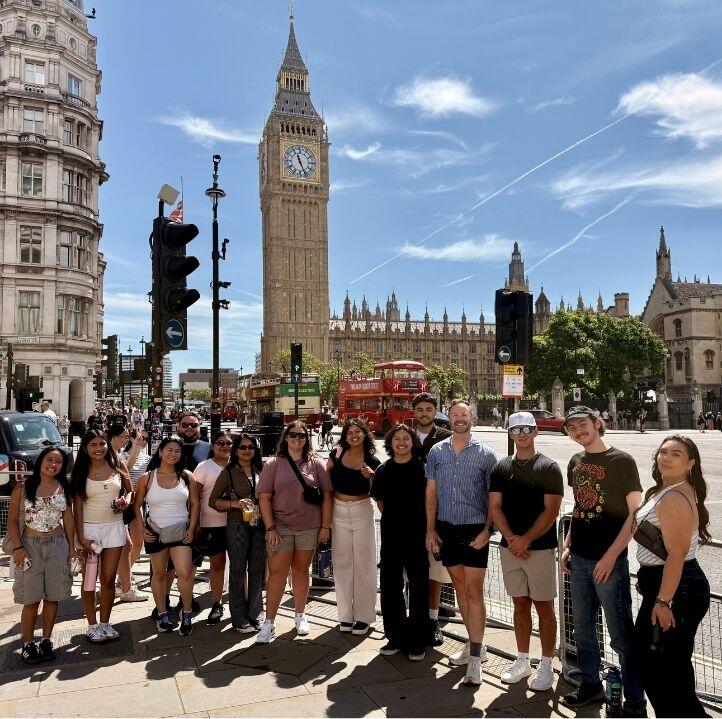
“Every year I watch students arrive as curious learners who hope they belong in these rooms. Three weeks later, they leave knowing they do. Somewhere between the client meetings, team challenges, difficult conversations, and final presentations, they stop seeing themselves as students completing an assignment and begin seeing themselves as leaders capable of making a genuine impact,” says Kyle Ingram, associate professor of teaching in management and program director.
The London Leadership Experience is a fully immersive, academically rigorous, three-week program that puts UCR students inside the rooms where real leadership happens — and asks them to show up, contribute, and lead.
Students earn credit for two courses — BUS 145: Designing and Leading Teams and BUS 190: Special Studies — while simultaneously consulting for a live client, conducting original research, and navigating the professional culture of one of the world’s great cities.
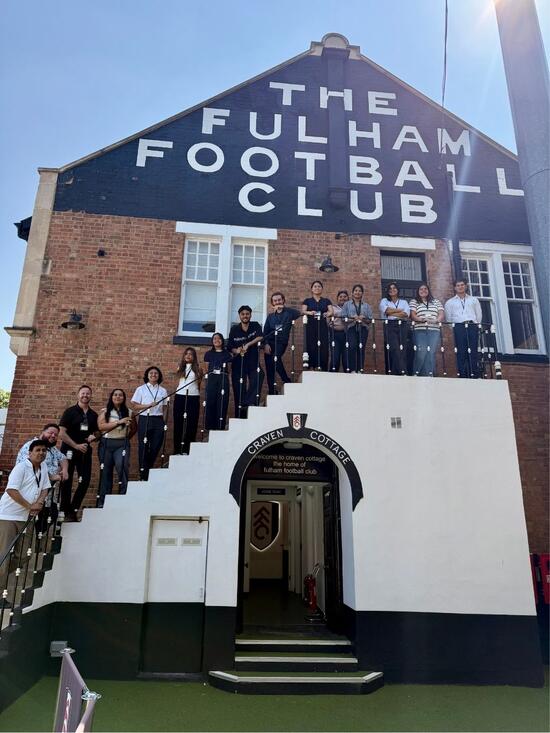
The Centerpiece: Consulting for Fulham Football Club Foundation
Most business students work through hypothetical case studies — analyzing companies from a distance, proposing solutions that will not be implemented, and receiving grades rather than feedback from the people whose organizations they studied. A centerpiece of this program is a live consulting engagement with the Fulham Football Club Foundation, where student teams work directly with Foundation leaders to tackle a real community challenge: how to deepen local impact, strengthen belonging, and reduce barriers to participation in sport. Students immersed themselves in the Foundation’s programs, audiences, and outreach efforts, identified gaps and
underserved communities, and developed creative, evidence-based recommendations for expanding its reach. Their work culminated in professional presentations to
Foundation leadership, transforming classroom learning into actionable ideas with the potential for real community impact.
Between formal engagements, students tested their teamwork through Spy Games and other related challenges — problem-solving experiences that are equal parts hilarious and revealing. They explored leadership and organizational culture through the British Museum’s extraordinary collections. They attended Shakespeare at Regent’s Park Open Air Theatre, took the train to Exeter and Cambridge, explored the maritime history of Greenwich, and spent an afternoon in Richmond discovering how a neighborhood builds identity and community. Along the Bermondsey Mile, students went beyond the polished stories of entrepreneurship, sitting down with local founders to ask what textbooks rarely capture: What does it really take to build something from scratch, what do you only learn by doing it, and how does leadership change when the risks—and the decisions—are your own?
Alternating annually between London and Brazil, the Leadership Experience study abroad program treats international education not as an added benefit, but as an
essential part of preparing students to lead in a globally connected world—challenging them to live like locals, navigate unfamiliar cultures, and learn firsthand how business, leadership, and community take shape across borders.
The goal is always the same: to develop graduates who are prepared not only to lead across cultures, but to do so with judgment, perspective, and authenticity. Through real organizational challenges, unfamiliar environments, and direct engagement with people whose experiences differ from their own, students learn that effective leadership begins with listening, understanding context, and knowing when to adapt. They return with more than confidence; they return with a more informed sense of who they are as leaders, how they affect others, and how to lead with purpose in an increasingly interconnected world.
For more information about the Leadership Experience programs and UCR’s global experiential learning programs, contact Dr. Kyle Ingram at the School of Business.